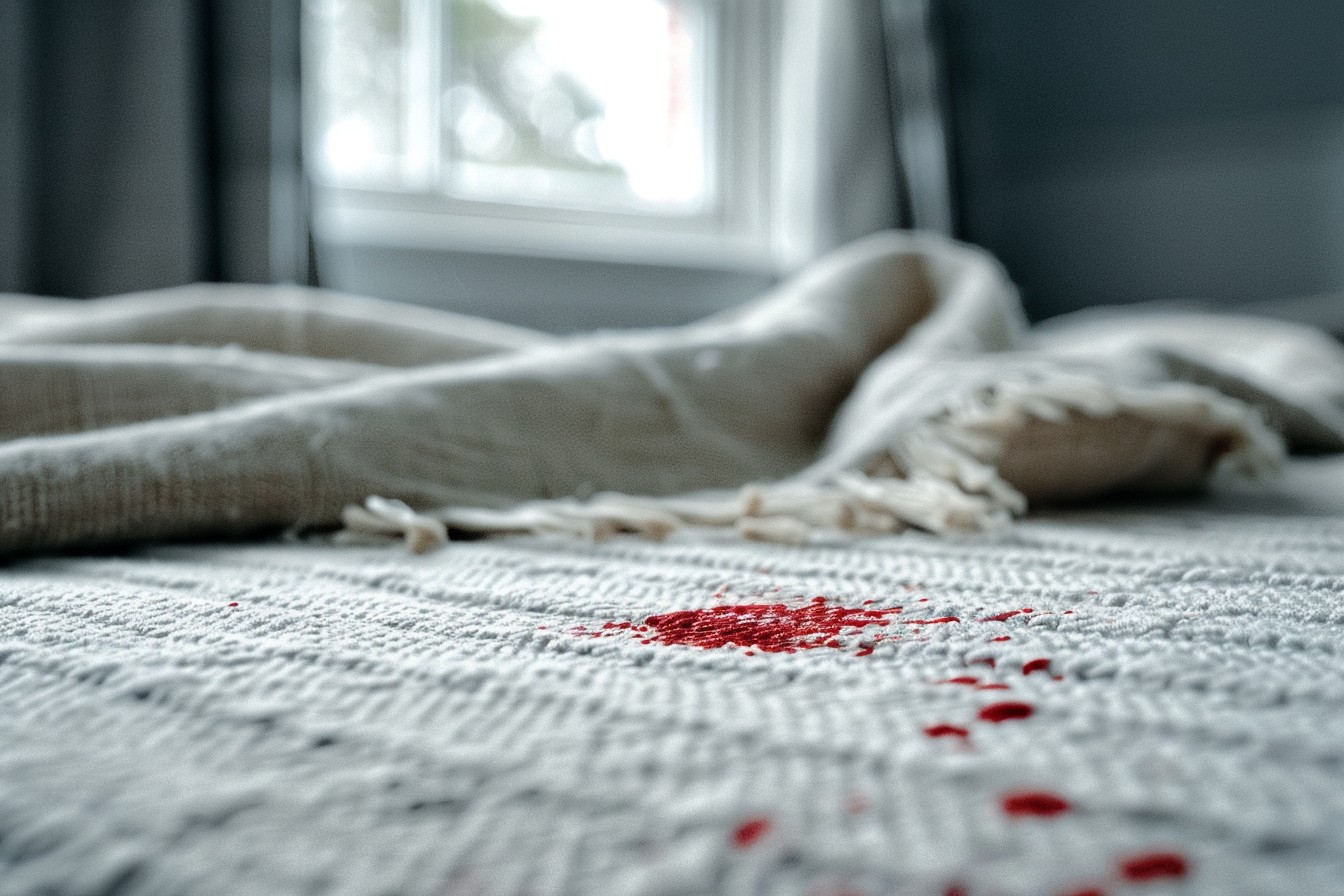
Nobody wants to be Googling this at seven in the morning. A nosebleed in the night, a cut that was smaller than it felt, a period that arrived earlier and with more ambition than anticipated – whatever the circumstances, you’ve woken up to a mattress that looks like a minor crime scene, and you’d quite like to fix it before anyone else in the household sees it. The good news is that blood stains on mattresses are among the more treatable staining problems in domestic cleaning, provided you approach them correctly. The bad news is that a remarkable number of people approach them incorrectly, often in ways that make the situation considerably worse.
The cold water method is the correct starting point – but “cold water” undersells what’s actually involved. Done properly, it’s a specific process with a specific logic behind it. Done approximately, it’s a way of spreading the problem around and feeling like you’ve achieved something. This article is about doing it properly.
Why Blood Is a Uniquely Stubborn Stain
The Science Behind Why Blood Bonds to Fabric
Blood is not like wine or coffee or bolognese. Those stains are primarily about pigment and surface adhesion – unpleasant, but relatively straightforward in their behaviour. Blood is a biological substance, and it behaves like one. It contains haemoglobin, a protein compound, and proteins do something deeply inconvenient when they encounter heat: they denature, which is a polite scientific way of saying they seize up, bond to the fibres they’re touching, and essentially set in place like biological cement.
This is the foundational fact that governs everything else about blood stain removal. The stain isn’t just sitting on the surface of your mattress fabric – it’s actively trying to integrate itself into the structure of it, particularly once warmth gets involved. Fresh blood on a cold surface is a manageable problem. Blood that has been heated, dried, or left for an extended period is a significantly harder one.
Why Heat Makes Everything Dramatically Worse
It bears repeating with some force: hot water on a blood stain is not cleaning it. It is cooking it. The same protein chemistry that makes a fried egg go from translucent to solid is at work when you pour warm water onto a bloodstain – you are permanently bonding the stain to your mattress at a molecular level and there is no route back from that particular decision. The same applies to tumble dryers, hairdryers pointed at the affected area, and the well-meaning instinct to “loosen it up” with warm water before treating it properly.
This is the single most common error in blood stain treatment, it is completely understandable in a bleary-eyed early morning panic, and it is the one thing that will convert a solvable problem into a permanent reminder of that Tuesday in February.
The Cold Water Method – What It Actually Involves
What You’ll Need Before You Start
The method is straightforward but it does require a moment of preparation rather than a panicked lunge at the nearest cloth. You’ll need: cold water – ideally the coldest your tap produces, or with a small amount of ice stirred through it if the stain is very fresh; clean white cloths or white paper towels (coloured cloths risk transferring dye under the friction involved); a small bowl; and optionally, a spray bottle if you have one, which allows more controlled application than pouring. That’s it for the basic method. No specialist products required at this stage.
The white cloth point is worth emphasising. In a crisis, people grab whatever is nearest – a dark flannel, a coloured tea towel – and then find themselves dealing with a blood stain and a dye transfer problem simultaneously. White cloths only, always.
The Step-by-Step Process Done Properly
Start by blotting, not rubbing. Place a clean white cloth over the stain and press firmly, working from the outer edge inward toward the centre. The logic is containment – rubbing outward spreads the stain into a larger area; working inward keeps it concentrated. Lift the cloth, fold to a clean section, and repeat. You are lifting blood out of the fabric, not pushing it further in.
Once you’ve removed as much as dry blotting will lift, dampen a clean cloth with cold water and begin working the stain again – still blotting, still working inward, still lifting rather than scrubbing. The cloth will start to pick up colour. Continue with fresh sections of cloth until the cloth comes away clean or nearly so.
The critical discipline here is patience. This is not a thirty-second job. A proper treatment of a fresh blood stain on a mattress will involve multiple cloths, multiple passes, and likely fifteen to twenty minutes of methodical work. People who “try the cold water method” and report that it didn’t work have, in most cases, given it four minutes and one cloth and concluded that the technique is at fault. It isn’t.
The Mistakes That Turn a Manageable Problem Into a Permanent One
Scrubbing, Soaking, and Panicking
Scrubbing – any kind of vigorous, back-and-forth friction on the stain – drives the blood deeper into the mattress fibres and spreads it laterally into previously clean areas. A mattress is not a saucepan. You cannot scrub it clean. Firm, controlled blotting is the technique; scrubbing is the enemy of the technique.
Soaking is the other major error specific to mattresses, and it’s a more consequential one than it would be with, say, a cotton shirt. A mattress has depth – significant depth – and water introduced in quantity will travel downward into the interior foam or spring structure, where it cannot be adequately dried. The result is damp inside the mattress, which creates the precise conditions for mould growth, and mould inside a mattress is not a cleaning problem; it is a replacement problem. Use moisture sparingly and precisely throughout this process.
Leaving It and Hoping
A blood stain left to dry on a mattress is not going to improve with time. It will oxidise, darken, and bond more completely with the fabric. If you wake up and discover it but genuinely cannot deal with it immediately – you’re late, the children need feeding, life is happening – at minimum blot up what you can with a dry cloth before you leave. Don’t apply anything warm, don’t spray anything on it and leave it to sit for hours, and don’t strip the sheet and walk away in the hope that it’ll be easier to deal with later. Later is harder. Now is always better.
When Cold Water Alone Isn’t Enough
Salt Paste for Fresh Stains
Salt is a useful escalation for stains that cold water alone isn’t lifting entirely. Mix table salt with just enough cold water to form a thick paste, apply it directly to the remaining stain, and leave it for fifteen to twenty minutes. The salt draws moisture and dissolved blood out of the fabric through osmosis as it dries. Remove with a clean damp cloth – cold water, blotting only – and assess. This is a particularly effective technique on fresh stains and adds very little risk to the process.
Hydrogen Peroxide – Effective, But With Caveats
For dried or stubborn blood stains, three per cent hydrogen peroxide – the standard concentration available at pharmacies – is the most reliably effective household treatment. Apply a small amount directly to the stain, allow it to fizz (that reaction is the peroxide breaking down the proteins in the blood), then blot away after a few minutes with a cold damp cloth.
The caveat is important: hydrogen peroxide is a mild bleaching agent. Test it on a hidden section of the mattress fabric first, particularly on darker or coloured mattresses, and don’t leave it in contact with the fabric longer than the instructions suggest. Used correctly, it is genuinely effective. Used carelessly on the wrong fabric, it will leave you with a clean patch that is now a slightly different colour to the rest of the mattress, which is a different but equally visible problem.
Enzyme-Based Cleaners
Biological or enzyme-based cleaning products – the kind with “bio” on the label, or specialist products like Prtosan or similar – break down proteins specifically, which makes them well-suited to blood stains. Apply according to the product instructions, keep everything cold, and blot clean. These are the products professional cleaners reach for on set-in stains that have already been partially treated and partially dried, and they’re more widely available in supermarkets than most people realise.
What We See in London Homes
Blood stains on mattresses are, professionally speaking, among the more routine things we’re asked to deal with across London properties – and the pattern is almost always the same. The stain is manageable. The stain has been treated with hot water. The stain is now permanent, or very nearly so.
It tends to happen in the better-appointed homes just as often as anywhere else. A thoughtful, capable person wakes up, sees the problem, wants to fix it immediately, and reaches instinctively for the warm tap because warm water cleans things – that’s what warm water does. The protein chemistry feels counterintuitive until you’ve heard it once and it clicks.
The other consistent finding is that mattress protectors are conspicuously absent from a great many beds that would benefit from them considerably. Not a glamorous product, not something that comes up in conversation, but a waterproof mattress protector that goes through the wash regularly is the most effective blood stain treatment available – because it means the mattress itself is never involved.
Cold, Patient, and Methodical Wins Every Time
The cold water method works. It works on fresh stains, it works on most partially dried stains when combined with salt or hydrogen peroxide, and it works without damaging your mattress if you apply it with the right technique. Cold water, white cloths, blotting inward, no scrubbing, no soaking, no heat at any stage.
The method doesn’t fail people. People fail the method – usually in the first ten seconds, at the hot tap, in a panic. Take a breath, fill a bowl with cold water, and approach it methodically. The mattress can be saved. It nearly always can, if you give the right method the time it needs.
About the Author